
Some leaders believe escalation is strength. Criticism shows rigor. Confrontation signals conviction.
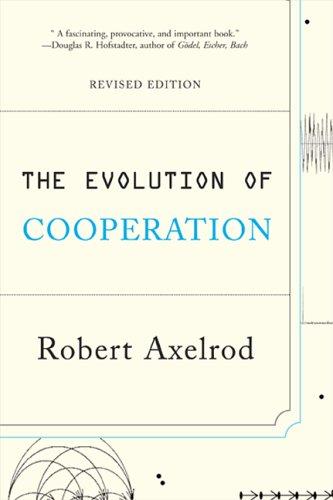
But Robert Axelrod’s classic “The Evolution of Cooperation” proved the opposite. Mathematically.
In his famous game theory tournaments, cooperative strategies consistently outperformed aggressive ones. Not occasionally. Every time. Across hundreds of simulations and repeated real-world interactions.
The insight that changed how I think about enterprise leadership:
In one-off interactions, aggression can win. In ongoing relationships — and that’s exactly what an enterprise is — cooperation is the dominant strategy.
Amy Edmondson’s research on psychological safety confirmed this at team level. Google’s Project Aristotle confirmed it at organizational scale. Gottman’s 5:1 ratio explains why criticism erodes exactly the trust capital you need to drive hard decisions when it matters.
So why do smart leaders still default to escalation?
Because it feels decisive. It creates the illusion of momentum. And in the short term — it sometimes works.
But every escalation costs something you can’t see on a dashboard: the willingness of peers to go the extra mile next time. The candid advice you won’t receive. The coalition that quietly doesn’t form.
Cooperation isn’t soft leadership. It’s the highest-yield long-term strategy available to you.
知行合一 — know it, then build it into every interaction.